


Obby Keyboard ASMR Runner
4.013.00 Reviews
App Specs
- Version
- 1.1.5
- Updated On
- License
- Free
- Downloads
- 100,000+
- Developer
- Evkar games
- Categories
- Arcade
- Platform
- Android
Screenshots
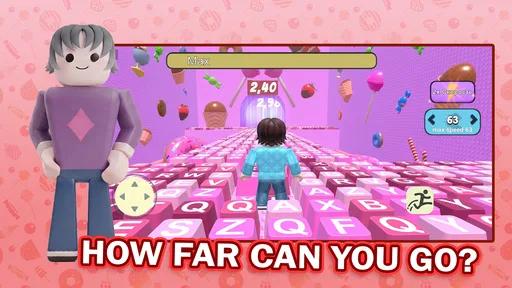
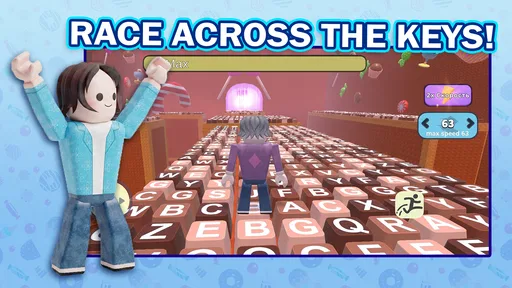
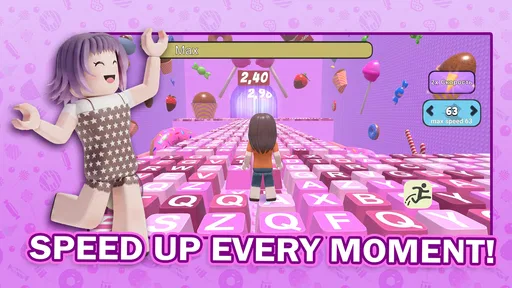

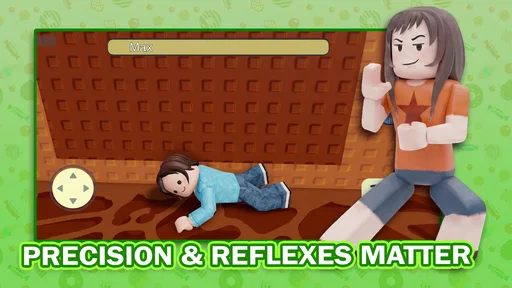
 Analysis by AppCompare
Obby Keyboard ASMR Runner caught my attention because it combines a familiar obstacle-course idea with the satisfying sound and rhythm of keyboard-style movement. After spending time with this arcade game, I found that its strongest quality is immediate accessibility: you can understand the basic goal almost at once, yet the timing still gives each run a little tension. It is free to start, developed by Evkar games, and aimed at Teen players, so it sits comfortably in the casual gaming space rather than trying to be a serious competitive platformer.
The central loop is easy to grasp. You guide the runner through a course, avoid traps, deal with bosses, and improve your progress as you play. The appeal comes from the combination of quick reactions and gradual advancement. I liked that the game does not ask me to learn a complicated control scheme before having fun. At the same time, its simple structure means the lasting question is not whether the first sessions are enjoyable, but whether the obstacles and progression remain interesting after the novelty of the keyboard theme wears off.
How the first sessions feel and what keeps the loop moving
My first impression was that this is best played in short bursts. A quick attempt can fit into a break, a commute, or the few minutes before doing something else. The arcade format makes it easy to start without a long setup, and the obstacle-course presentation gives each run a clear purpose. I never felt lost about what I was supposed to do: move forward, react to danger, and try to reach a better point than before.
The ASMR angle gives the game a distinct personality. Keyboard-inspired sounds can make repeated actions feel more tactile, especially when the movement and audio line up well. That sensory feedback is more important here than it would be in a plain obstacle game because it turns ordinary progress into a small rhythm. I would not describe it as a deep sound-focused experience, but the audio theme helps separate it from the many endless runners that rely only on speed and bright visuals.
The first week is where the game makes its best case. New players can learn through repetition rather than reading long instructions, and the presence of traps and bosses gives the run more shape than a completely flat course. The feeling of leveling up also adds a reason to try again after a mistake. When I failed, I usually understood what had gone wrong, which is important in an arcade game: a retry feels worthwhile when the player can adjust timing instead of simply hoping for a better result.
One useful way to approach the opening sessions is to treat them as practice rather than as a race to unlock everything. I found it more productive to notice the rhythm of hazards and identify which moments caused hesitation. Trying to move faster before the route feels familiar can turn a manageable section into a string of avoidable mistakes. In that sense, the game rewards a calm first pass, followed by more aggressive attempts once the pattern becomes comfortable.
The boss encounters also help break up the ordinary obstacle sections. They give the run a stronger sense of punctuation and make progress feel more meaningful than simply crossing another stretch of track. However, players looking for elaborate boss battles should keep their expectations measured. This remains a compact arcade title, not a story-driven action game. The bosses are useful as changes of pace, but they do not transform the game into a larger adventure.
Worth Reading Before You Choose

Flipboard Shows What News Apps Must Do Beyond the Feed

Switching to Android Auto Means Rethinking Your Driving Routine

Google Calendar Makes a Crowded Week Easier to Manage

Ludo King Makes the Most of the Minutes Between Plans

Baby Panda World Brings Quick Play to Modern Phones, but Its Game Library Feels Busy

ESPN’s Live Game View Makes Following Close Games Easier
For a realistic everyday use case, I can see this working well during a short waiting period. I might play a few attempts while waiting for an appointment, then close it without feeling that I had abandoned a complicated campaign. That low commitment is a genuine strength. It also means the game needs a steady supply of satisfying moments, because there is no long narrative or broad exploration system encouraging me to return by itself.
The store rating sits at a 4.0 average from roughly eight hundred ratings, while the game has passed one hundred thousand installs. Those figures suggest that it has found an audience, but they do not remove the need to judge its personal staying power. In my experience, the early appeal is clear: it is approachable, quick to understand, and different enough from a standard runner to earn several repeat sessions.
Where the game fits among arcade alternatives
Compared with a conventional endless runner, this game feels more focused on obstacle-course timing and the satisfaction of navigating a defined challenge. A typical runner may emphasize collecting items, escaping a constant threat, or building the longest possible distance. Here, the keyboard identity and the presence of traps and bosses give the experience a more staged feeling. I preferred that when I wanted a task to solve rather than a purely reflexive score chase.
On the other hand, players who enjoy arcade games with extensive character collections, deep customization, or competitive leaderboards may find this experience narrower. Its strength is the directness of the run, not a large ecosystem of systems around it. That makes it easier to pick up, but it also limits the number of different reasons to return once the core routes become familiar.
The game is a particularly good match for someone who likes obstacle courses, quick retries, and sensory feedback. It is less suitable for anyone seeking a substantial single-player campaign, a relaxing game with almost no failure, or a highly technical platformer with precise movement options. I would also be cautious about recommending it to someone who dislikes repeated attempts; retrying is not a side activity here, it is the main way the experience develops.
What remains after the novelty fades
The more difficult test begins after the first week. The initial combination of keyboard sounds, traps, bosses, and leveling has enough freshness to encourage repeated play. A month-to-month habit needs more than that first impression, though. It needs a reason to return that still feels satisfying when the player already understands the basic loop.
For me, the recurring value depends on whether improving execution remains enjoyable. If I am close to handling a difficult section cleanly, another attempt has a clear purpose. The game works best when I set a small personal target, such as reaching a troublesome part without rushing or completing a familiar section with fewer errors. This self-directed approach can extend the life of a simple arcade title, but it also places more responsibility on the player than a game with a large progression map.
That is the first important long-term trade-off: the title can remain useful as a compact skill game, but it may not provide enough variety for people who need constant new content. The leveling structure gives progress a visible direction, yet progression alone does not guarantee freshness. Once the player has learned the main patterns, the satisfaction shifts from discovery to refinement. Some players enjoy that shift; others will feel that the game has become repetitive.
I recommend using short, deliberate sessions rather than leaving the game open for long stretches. A few focused attempts preserve the sense of challenge and make successful movement feel earned. Long sessions can expose the limited nature of the loop more quickly, especially after repeated failures in the same area. This is one of the less obvious ways to get more value from the game: stopping while the challenge still feels active can make the next return more appealing.
The current version is 1.1.5, and that is worth keeping in mind when judging the game as a maintained product rather than a one-time novelty. I would check that the installed version stays current before deciding that a problem is permanent. For a small arcade title, ongoing maintenance matters because even minor refinements to controls, pacing, or stability can influence whether short sessions remain pleasant. I would not treat the version number as a promise of a particular update schedule, but it does show that the game has moved beyond its earliest release state.
There is also a practical question about cost. The game is free, which makes trying it straightforward, but optional in-app purchases range from ninety-nine cents to six dollars and ninety-nine cents per item. I would approach those purchases carefully. The most sensible test is to play long enough to decide whether the basic loop already fits your habits. If the free experience does not hold your attention, spending money is unlikely to solve the underlying issue of repetition.
For younger players, the Teen content rating is another reason for families to consider whether the tone and obstacle-focused action suit the intended player. The rating does not tell me how every individual will respond to the game, so I would still use normal judgment when choosing it for a child or teenager. The simple controls make it approachable, but approachability is not the same as universal suitability.
Maintenance, friction, and the points where fatigue appears
The maintenance burden is fairly light in the everyday sense. There is no complicated build to manage, no large collection of menus that demands regular attention, and no need to commit to a long campaign. I can open it, play, and leave. That is valuable for a game intended to fill small gaps in the day. The main maintenance task is psychological: keeping the sessions short enough that repetition does not become the entire experience.
Audio is another factor. The ASMR keyboard concept is a strength when I am in the mood for tactile feedback, but repeated sounds can become tiring if I play for too long or if the effect does not match my preferences. This is not a flaw unique to this title; sensory design is naturally more personal than a basic visual theme. Still, anyone sensitive to repetitive sound should treat the audio identity as something to evaluate early, not as a minor detail.
Failure fatigue is the biggest threat to long-term use. Traps are useful because they create tension, yet a section that repeatedly catches me without teaching me anything would quickly feel irritating. I found the best attitude was to separate learning attempts from speed attempts. On a learning run, I watched for the hazard and accepted slower progress. On a speed run, I focused on applying what I had already learned. Mixing those goals made mistakes feel more frustrating than they needed to be.
Boss sections can create a similar divide. They are welcome when I want a change of pace, but a player who prefers a smooth, uninterrupted run may see them as interruptions. That is a matter of taste rather than a universal weakness. If your ideal arcade session is a continuous flow with no major shift in pressure, a simpler runner may suit you better. If you like a run to build toward a more noticeable challenge, these encounters give the structure extra energy.
Another source of fatigue is the limited range of play styles. The core actions are easy to understand, which is excellent for accessibility, but it also means experienced players may eventually feel that they are repeating the same type of decision. The game does not need to be complicated to be fun, yet long-term players should know that its appeal is concentrated in timing, route familiarity, and personal improvement rather than broad strategic choice.
I also would not recommend treating it as a replacement for a full arcade library. It works well as a small, focused option alongside other games, especially when I want something immediate. It is less convincing as the only game on a device. A larger platformer is better for exploration, a competitive runner may be better for score chasing, and a rhythm game may offer more musical depth. This title earns its place when its specific combination of keyboard atmosphere and obstacle-course movement is what I want.
Who should keep it installed
I would keep this game installed if I enjoyed quick challenges and liked measuring improvement against my own previous attempts. It is also a good choice for players who appreciate a game that explains itself through action rather than lengthy tutorials. The free entry point makes experimentation easy, and the compact format suits people who do not want a major time commitment every time they play.
I would be more hesitant for someone who needs a strong narrative, frequent content changes, or a large set of unlockable systems to maintain interest. The same simplicity that makes the game friendly during the first session can become its main limitation later. Players who dislike sound-driven presentation, repeated retries, or optional purchase prompts should also consider whether those elements will interrupt their enjoyment.
One practical habit improves the experience: decide before each session whether the goal is learning, progressing, or simply relaxing. Those are different moods, and the game responds better when I do not demand all three at once. For learning, I slow down and observe. For progression, I focus on reaching the next meaningful point. For relaxation, I accept that a failed run is not wasted time. This small distinction makes the straightforward design feel more flexible than it first appears.
After the novelty fades, its lasting value comes from repeatable timing practice rather than endless variety. That is a respectable foundation, but it is not the same as offering a constantly expanding game. I found enough personality in the keyboard theme and enough structure in the traps and bosses to justify returning, particularly in short sessions. I did not find a reason to make it my main arcade game for every day.
My final recommendation is therefore positive but specific. Obby Keyboard ASMR Runner is worth trying if you want a free arcade game for brief obstacle-course sessions, enjoy tactile sound design, and are comfortable improving through retries. Evkar games has created something approachable with a clear identity, and the current version makes a reasonable first impression. Just keep your expectations centered on focused runs and personal mastery. If that sounds satisfying, it can earn a lasting place on your phone; if you need constant novelty, a broader arcade alternative will probably serve you better.
Pros
- Simple controls make it easy to start playing immediately.
- Satisfying keyboard sounds add an engaging ASMR element.
- Short levels are convenient for quick gaming sessions.
- Bright visuals and obstacle courses feel entertaining and casual.
- Playable concept suits fans of relaxing yet interactive runner games.
Cons
- Gameplay may become repetitive after several runs.
- Some obstacles can feel more frustrating than challenging.
- ASMR effects may not appeal to players who prefer quiet gameplay.
- Progression may feel limited for experienced mobile gamers.
- Performance can vary on older devices during busy scenes.
FAQs for Obby Keyboard ASMR Runner
What is Obby Keyboard ASMR Runner?
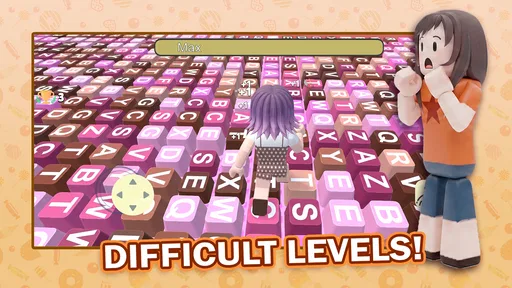
Obby Keyboard ASMR Runner is a casual obstacle-course game that combines fast running challenges with keyboard-inspired ASMR sounds. Players guide a character through colorful tracks, avoid traps, collect rewards, and try to reach the finish line without falling. Its simple controls make it easy to start, while increasingly difficult levels provide a more challenging experience for players who enjoy short, reaction-based games.
How do you play Obby Keyboard ASMR Runner?
The game is designed around straightforward touch controls, making it accessible even if you have little experience with mobile obstacle games. You generally control the runner by tapping, swiping, or using on-screen prompts to move through platforms and avoid hazards. Timing is important, especially when jumping between narrow sections, navigating moving obstacles, or reacting quickly to changes in the course.
Is Obby Keyboard ASMR Runner suitable for children?
Obby Keyboard ASMR Runner has a colorful, non-realistic presentation and gameplay that is generally easy for younger players to understand. However, parents should still review the available advertising, in-app purchase options, privacy information, and age rating before allowing children to play. Difficulty, repeated failures, and online advertisements may also affect the experience depending on the device and version installed.
Does Obby Keyboard ASMR Runner require an internet connection?
The basic running gameplay may be playable without a constant internet connection, but some features can depend on online access. Advertisements, reward videos, updates, leaderboard functions, or other optional content may not work while offline. Because requirements can vary between versions, it is best to test the game in airplane mode after installation if offline play is important to you.
Are there advertisements or in-app purchases in Obby Keyboard ASMR Runner?
As with many free-to-download mobile games, Obby Keyboard ASMR Runner may include advertisements and optional purchases. Ads can appear between levels or when claiming bonus rewards, while purchases may offer cosmetic items, progress-related benefits, or an option to reduce advertising. Before downloading, check the store listing for the latest pricing and purchase details, and use device parental controls if needed.


